

-
appelez nous
0086 13559245184 -
Envoyez-nous un email
sales@fortunepart.com
appelez nous
0086 13559245184Envoyez-nous un email
sales@fortunepart.com
Aug, 2026
Les problèmes d'usure courants du train de roulement, s'ils sont détectés tôt, coûtent de 40 à 60 % moins cher qu'un remplacement complet. Le train de roulement est la pièce la plus coûteuse. Un galet de chenille usé peut entraîner une remise en état à 6 000 $. Voici les cinq principaux signes avant-coureurs :train de roulement d'excavatricepartiesLes signes d'alerte comprennent une tension anormale des chenilles, des dents de pignon usées, des galets fissurés, des pièces desserrées et des bruits inhabituels. Ignorer ces signes peut entraîner une panne catastrophique et des arrêts de production coûteux. Ce guide propose une méthode pratique pour détecter ces problèmes au plus tôt.
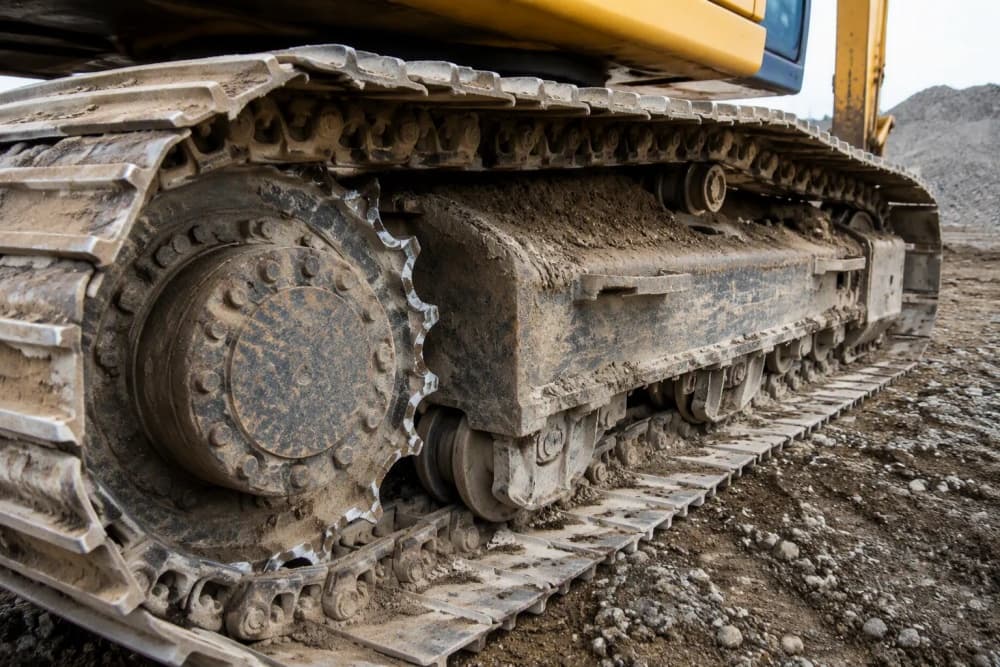
Les inspections visuelles quotidiennes permettent de détecter les premiers signes de défaillance, comme l'affaissement des chenilles, les fissures et les boulons desserrés.
Une tension correcte des chenilles empêche l'usure accélérée des pignons et des galets tendeurs.
Des bruits de cliquetis ou de grincement inhabituels signalent un contact métal sur métal.
Utilisez des jauges d'usure pour mesurer avec précision les dents du pignon et les flasques de la roue libre.
Un nettoyage et une lubrification réguliers permettent d'éliminer les débris et de réduire la friction.
L'un des premiers indicateurs visuels d'usure du train de roulement est l'affaissement de la chenille. Lorsque la chaîne s'étire, la chenille s'affaisse plus bas que la normale. Vous pouvez mesurer cet affaissement en vérifiant la distance entre la chenille et le bas du train de roulement.rouleau porteurSur une pelle hydraulique standard de 20 tonnes, la flèche se situe généralement entre 35 et 45 mm, bien que les valeurs exactes dépendent de la marque et de l'application. Un dépassement de cette plage indique un allongement de la chaîne.
Vous pouvez repérer l'allongement de la chaîne en recherchant les indicateurs suivants :
Allongement du pas supérieur à 2 % : indicateur de gravité élevée nécessitant le remplacement de l'ensemble complet.
Plaques de maillons fissurées, en particulier près des bossages d'axe : nécessite un remplacement immédiat de la chaîne.
Motif en aileron de requin sur les dents du pignon : indique une usure avancée et constitue un signe visuel direct de l’allongement de la chaîne.
Le remplacement de la chaîne est nécessaire lorsque l'allongement du pas dépasse 2 % des spécifications d'origine — il s'agit d'un indicateur clé pour éviter d'endommager le pignon et maintenir un fonctionnement sûr.
Les boulons de vos patins de chenille sont essentiels à l'intégrité structurelle de la chenille. Un boulon cassé ou manquant fragilise non seulement le patin, mais peut également entraîner des dommages plus importants si le problème n'est pas résolu.
Les boulons sont essentiels à l'assemblage de vos machines. S'ils sont manquants, cassés ou endommagés, c'est le signe qu'il est peut-être temps de les remplacer. Cela compromet l'intégrité structurelle de votre équipement et peut représenter un danger pour la sécurité.
Les principaux signes de problèmes matériels sont les suivants :
Boulons manquants ou desserrés : cette situation peut entraîner une instabilité et une usure accrue des autres composants.
Inspectez les boulons de chenille toutes les 500 heures ou une fois par mois. Utilisez une clé dynamométrique pour vérifier leur serrage. Resserrer immédiatement tout jeu constaté.
Les fissures sur les galets et les roues libres sont un signe évident de fatigue du train de roulement. Vous pouvez les repérer lors des inspections quotidiennes. Les causes fréquentes sont les suivantes :
fatigue des métaux due à des cycles de contrainte répétés
Tension incorrecte
Accumulation de débris et de boue
Surchauffe et températures extrêmes
Contamination des fluides et faibles niveaux
Impact des rochers ou des nids-de-poule
défauts de fabrication
Corrosion due à l'eau salée ou à l'exposition à des produits chimiques
La tension des chenilles est le réglage le plus important que vous puissiez effectuer sur votre machine. Une tension incorrecte est la principale cause de défaillance prématurée des composants du train de roulement. Un mauvais réglage accélère l'usure de l'ensemble du système. La relation entre la tension et la durée de vie des composants est directe et mesurable.
Une tension excessive crée une pression excessive sur chaque pièce mobile. Vous forcez les bagues de chenille contredents de pignonLa pression de contact augmente considérablement. Cette pression génère un frottement important, provoquant une accumulation de chaleur et une usure rapide. Les roulements de la roue libre avant sont les plus touchés. La tension élevée et constante les soumet à des contraintes et à un frottement excessifs, réduisant ainsi leur durée de vie.
Une tension de chenille plus élevée entraîne une usure plus importante des pignons, et une tension de chenille plus faible (moins de charge) entraîne une usure moindre.
Vous pouvez identifier une surtension grâce à plusieurs symptômes observables :
Déchirures et déformations des rails sur les bords extérieurs
Perte de puissance pendant le fonctionnement
Usure excessive des roulements de galet tendeur
Vibrations accrues, surtout sur terrain accidenté
Absence d'affaissement visible (les rails semblent étirés et tendus)
Adhérence réduite sur sol mou ou boueux
Consommation de carburant plus élevée en raison de l'augmentation de la résistance au roulement
L'indicateur le plus fiable reste le fléchissement des chenilles. Si ce fléchissement est inférieur à la valeur spécifiée dans votre manuel d'entretien, vos chenilles sont trop tendues. Il est alors nécessaire de dégraisser le vérin de tension pour corriger ce problème.
Un sous-tensionnement engendre des problèmes tout aussi dangereux. Les chenilles détendues ne s'engagent pas correctement dans les dents des pignons et les flasques des galets. Ce mauvais engagement provoque des ébréchures et une usure anormale des dents des pignons. La chenille peut dérailler des pignons d'entraînement, ce qui accélère l'usure des composants.
Des chenilles trop serrées exercent une pression excessive sur les composants, accélérant leur usure. Des chenilles trop lâches peuvent dérailler des pignons d'entraînement, entraînant une usure encore plus rapide des composants.
La conséquence la plus grave d'une tension insuffisante est le déraillement. Un jeu excessif de la voie provoque directement son déraillement par rapport à la roue de tension avant ou son passage par-dessus la roue dentée lors des virages, des charges latérales ou des travaux de coupe. Ce risque augmente considérablement en marche arrière. Environ 75 % des maillons de la voie restent simultanément en contact, sous charge et en mouvement entre le bas de la roue de tension avant et le premier maillon en prise avec la dent de la roue dentée.
Plusieurs facteurs contribuent à la sous-tension :
Les fuites des joints d'huile du vérin de tension entraînent une perte de pression hydraulique.
Un ressort cassé dans le dispositif de tension ne permet pas de maintenir une tension correcte.
Ensembles de goupilles et de bagues usés sur les rails de la chaîne
Un jeu excessif dans les rails est une cause directe de déraillement. Bien que la tension se règle normalement à l'aide du vérin de tension et d'une pompe à graisse, si les rails restent tendus même après l'ajout de graisse, le problème peut provenir de l'usure des axes et des bagues des rails de chaîne. Une fois ces pièces usées, un simple réglage de la tension ne suffira plus et il faudra peut-être remplacer l'ensemble du rail de chaîne.
Pour mesurer précisément le fléchissement des chenilles, une méthode systématique est nécessaire. Garez votre pelle sur un terrain plat. Positionnez la chenille de façon à ce que la zone entre la roue de tension avant et le premier galet porteur soit à son point le plus bas. Placez une règle sur le dessus de la chenille. Mesurez la distance verticale entre la règle et le haut du maillon.
Comparez votre mesure aux spécifications de votre manuel d'entretien. Pour une pelle hydraulique standard de 20 tonnes, la flèche se situe généralement entre 35 et 45 mm. Les valeurs exactes dépendent de la marque et de l'application. Si votre mesure est hors de cette plage, ajustez la tension en conséquence.
Ajoutez de la graisse au vérin de tension pour augmenter la tension et réduire l'affaissement. Retirez de la graisse pour diminuer la tension et permettre un affaissement plus important. Après chaque réglage, faites fonctionner brièvement la machine et effectuez une nouvelle mesure. Répétez cette opération jusqu'à obtenir les spécifications correctes.
Il convient de vérifier régulièrement la tension des étriers, toutes les 250 heures de fonctionnement ou chaque semaine, selon la première échéance. Il est également recommandé de la contrôler après toute variation importante de température ou après une utilisation dans des conditions extrêmes. Un contrôle adéquat de la tension prévient l'usure prématurée et prolonge la durée de vie de l'ensemble du train de roulement.
L'état des dents du pignon révèle le véritable état de votre système de chenilles. Si vous observez un profil pointu et acéré sur les dents, il s'agit d'un phénomène appelé « affûtage ». Cette formation indique que le pas de la chaîne a augmenté en raison de son allongement. La chaîne s'étire et les dents ne s'engrènent plus correctement avec les bagues.
The consequences of thiswearpattern extend beyond the sprocket itself:
Uneven toothwearleads to poortrackengagement and diminished performance.
Worn tooth profiles cause the bushing to slam into the tooth root, generating shock loads that travel back through the final drive.
Once tooth tipwearexceeds 25-30% of original height, engagement becomes sloppy, causing thetrackto pitch and slap.
Asymmetricwearfrom forward and reverse operation impairs the tooth's ability to mesh cleanly, reducing power transfer efficiency.
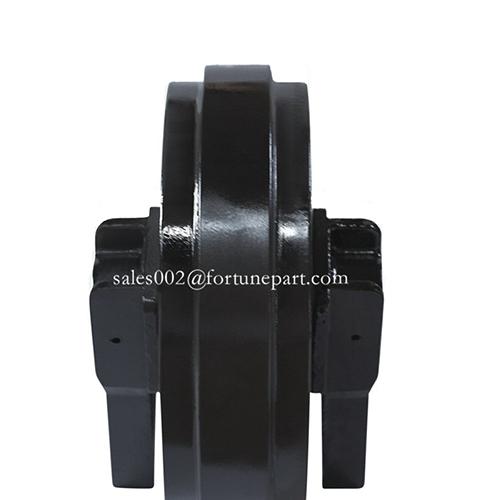
Idlers carry a significant portion of your machine's weight, and their flanges guide thetrackchain along the frame. A misaligned front idler forces the chain to twist and bend as it travels, generating enormous side-loading forces. This unnatural movement concentrateswearheavily on one side of the idler's tread and flange. Adjacent rollers then take on a guiding role they were not designed for, leading to rapid abnormalwear.
An idler can last between3,000 to 5,000 operating hoursdepending on working conditions, maintenance practices, and material quality. This range applies to generalwearthat includes flange degradation.
Cracks on idlers signal metal fatigue from repeated stress cycles. You should inspect flanges for thinning edges and check the tread surface for flat spots. Both conditions shorten component life and compromise yourexcavator's stability.
Visual inspection alone cannot give you precise data. You need calibrated tools to measurewearaccurately. Precision calipers, either digital or vernier, serve as the primary tool for measuring sprocket toothwear. The measurement method involves checking from the base of the tooth pocket to the tip of the tooth. You then compare this value against the manufacturer'swearlimit chart.
For idler flanges, you can use a dedicated flangeweargauge to measure the remaining thickness. Regular measurement every 250 hours helps you trackwearprogression and predict replacement intervals. This data-driven approach prevents unexpected failures and keeps yourundercarriageoperating efficiently.
Your ears serve as powerful diagnostic tools during daily operation. Unusual sounds from the undercarriage often provide the earliest warning of component failure. You must learn to distinguish between normal operational noise and the sounds that indicate serious problems.
Different sounds point to different failure modes. You need to identify each one accurately to diagnose the root cause.
|
Sound |
When It Occurs |
Likely Cause |
|---|---|---|
|
High-pitched squealing |
During turns |
Metal-on-metal contact between worn flanges and track link sides |
|
Loud popping or snapping |
During operation |
Severely worn sprocket engaging with worn bushings, worsened by worn or misaligned rollers |
|
Rhythmic 'clack' |
With each track revolution |
Loose roller or a single severely worn component |
A rhythmic clack that repeats with each revolution demands immediate investigation. This sound typically indicates a loose track roller or one severely worn component. You should stop the excavator and inspect the affected area before continuing work.
A loose track produces a distinctive slapping or flapping sound as it contacts the rollers and idlers. You might hear a dull thud each time the track loses proper engagement with the drive sprocket. This noise often accompanies visible track bounce during operation.
When you hear this sound, check your track tension immediately. A slipping track accelerates wear on bushings, sprockets, and rollers. You risk derailment if you continue operating under these conditions.
Increased vibration through the cab provides a direct symptom link to track roller issues. Uneven roller wear causes this vibration, and that uneven wear may signal misalignment of tracks. Machines with worn rollers begin to ride rough and exhibit excessive track bounce.
The mechanism works as follows:
Track-excited vibration represents the most common vibration in tracked machines, generated by contact between track links and rollers.
Roller frame, idler, and sprocket alignment problems unevenly affect chain rollers, leading to uneven wear patterns.
This uneven wear produces a saw-pattern on track links, directly contributing to increased vibration.
The vibration transmits through the machine structure to the cab, becoming quite relevant when working on a smooth surface.
You should investigate any new vibration that appears during normal operation. Check for misalignment of tracks and inspect your track rollers for uneven wear patterns. Early detection prevents costly damage to your entire undercarriage system.
A structured maintenance routine protects your undercarriage investment. Daily checks, proper cleaning, and timely professional service prevent the small issues that grow into expensive failures. The cost of a few minutes each day is nothing compared to a $20,000 undercarriage rebuild.
A daily visual inspection takes only ten minutes. Walk around your machine and check these items:
Track tension: verify proper sag adjustment for your current conditions
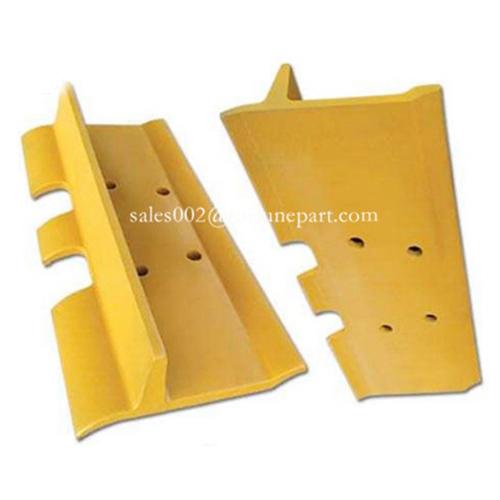
Track pads and shoes: inspect for wear, cracks, missing pieces, or loose bolts
Track links and pins: look for visible wear, seized links, or elongation
Idlers and rollers: check for leaks, damage, bearing play, and seal condition
Sprockets: examine teeth for wear, chipping, or knife-edging
Frame and guards: search for damage, cracks, or misalignment
This checklist covers the most common failure points. Perform it every morning before you start work. A lack of regular maintenance causes 80% of premature undercarriage failures.
Cleaning removes the debris that accelerates wear. Mud, gravel, and clay pack into roller frames overnight. The packed material cures and hardens like concrete. When you move the excavator, these hardened obstructions freeze the top carrier rollers andbottom track rollersin place. Forcing the track to slide over a seized track roller grinds flat spots into the roller shells within days, permanently destroying the components.
If operating in sticky clay, loosen the steel track slightly. Mud packing will naturally tighten the track, so this adjustment compensates for the added tension that accelerates wear.
Regular lubrication of grease points keeps pins and bushings moving freely. Dry joints accelerate wear and create the metal-on-metal contact that destroys components.
Professional inspections catch issues you might miss during a quick walk-around. The frequency depends on your operating conditions:
|
Frequency |
Inspection Type |
Description |
|---|---|---|
|
Daily |
Visual |
Check for immediate issues visible to the operator |
|
Weekly |
Detailed with measurements |
Measure track tension, sprocket wear, and roller condition |
|
Monthly |
Comprehensive maintenance evaluation |
Full assessment including lubrication, alignment, and structural checks |
|
As needed |
Additional detailed inspections |
Required in abrasive environments like rocky, wet, or high-dust conditions |
Call a professional if you notice any of the following: unusual noises that persist, visible cracks on structural components, or measurements that exceed manufacturer wear limits. A trained technician can measure pin and bushing wear with precision tools and recommend the right time for replacement. This proactive approach saves you thousands of dollars compared to emergency repairs.
Une inspection quotidienne de 10 minutes permet d'éviter un remplacement du train de roulement d'une valeur supérieure à 20 000 $. Soyez attentif aux signes visuels tels que l'affaissement des chenilles, les fissures et les boulons manquants. Soyez attentif aux indicateurs mécaniques comme le bruit et les vibrations. Vérifiez les problèmes structurels, notamment les fissures du châssis et les fuites de graisse provenant d'un galet de chenille. Un nettoyage régulier, une tension correcte et une lubrification opportune restent les pratiques les plus rentables. Ces actions réduisent directement l'usure du train de roulement de votre pelle. En cas de doute, effectuez des mesures. Utilisez des jauges d'usure et consultez le manuel de votre équipement pour connaître les limites spécifiques. Cette approche protège votre investissement dans votre pelle et prolonge la durée de vie des composants de la chenille.
Il est conseillé d'effectuer une inspection visuelle quotidienne avant de commencer à travailler. Un rapide contrôle de 10 minutes permet de détecter les problèmes précoces tels que des boulons desserrés, un affaissement des chenilles ou des fissures. Chaque semaine, mesurez la tension des chenilles et l'usure des pignons à l'aide d'un appareil de mesure. Prévoyez un contrôle plus approfondi chaque mois.
Une tension de rail incorrecte est la principale cause de défaillances prématurées. Une tension excessive accélère l'usure des pignons et des galets tendeurs. Une tension insuffisante entraîne un déraillement et endommage les bagues. Des contrôles réguliers de la tension permettent de prévenir ces problèmes et de prolonger la durée de vie des composants.
Oui, vous pouvez remplacer les pièces individuellement, mais vous devez d'abord vérifier les pièces associées. Un pignon usé est souvent le signe d'une chaîne détendue. Remplacer une seule pièce sans corriger l'allongement de la chaîne peut entraîner une usure rapide de la nouvelle pièce.
Un bruit de grincement indique généralement un contact métal sur métal entre les bagues usées et les dents du pignon. Arrêtez immédiatement la machine. Inspectez les dents du pignon et la chaîne de transmission afin de détecter toute usure excessive. La poursuite de l'utilisation peut entraîner des dommages catastrophiques.
catégories
récent des postes
Mots clés
Xiamen Fortune Industrial Co., Ltd.
Room 402,No.7,Kangleli,Huli District, Xiamen, Fujian, China
Tel : 0086 13559245184
Fax : 0086-592-7072790
Whatsapp/Wechat : +8613559245184
Contact Person: James Xie
Email: sales@fortunepart.com
Microsoft Teams: part-sales
numériser pour wechat: